Designing On Paper
Notes from 18 September 2026.
Lately I've been thinking about thinking, in big part because of how AI tools have recently changed software engineering and development.
A lot of people report the same symptoms: mental regression, noise, a lack of enjoyment of the craft. I have been just as affected. In the past, getting into some very niche part of a working system, like Windows, or programming some elaborate tool in C++ or C, felt like a really cool accomplishment, because that process strips away abstraction since you have to deeply interact with the subject at hand. Now most issues are tackled conceptually. It's enough to tell the AI to work out some window function and drawing with the Win32 API, and in some cases you don't even need that much, it's enough to understand it as "the native Windows windowing thing, or whatever."
Here's a small, very literal example, since we're on the web: centering a box on a page was never actually impossible, but for well over a decade the only ways to do it either abused a layout tool meant for something else, or required you to already know the box's exact pixel size before you could center it.
+ show the code- hide the code
But enough talk about programming specifically, because programming, or better said engineering, is itself a form of design. And I've been observing that same subtle shift throughout the years across design thinking as a whole. (I'm not an extraordinary visual designer, so take my words in that context with the necessary grain of salt.)
On Paper
In the past most ideas were worked out on paper very thoroughly before committing them to a medium of choice. Meaning ideas weren't sketched on paper, they were finalized on it as well. And sure, not all designs were extraordinary as a result, and that's not what I'm arguing anyways. There was a certain humanity to it. And with time, processes were streamlined more and more to support "creating" and to empower the designer to use their blocks or mental models more effectively.
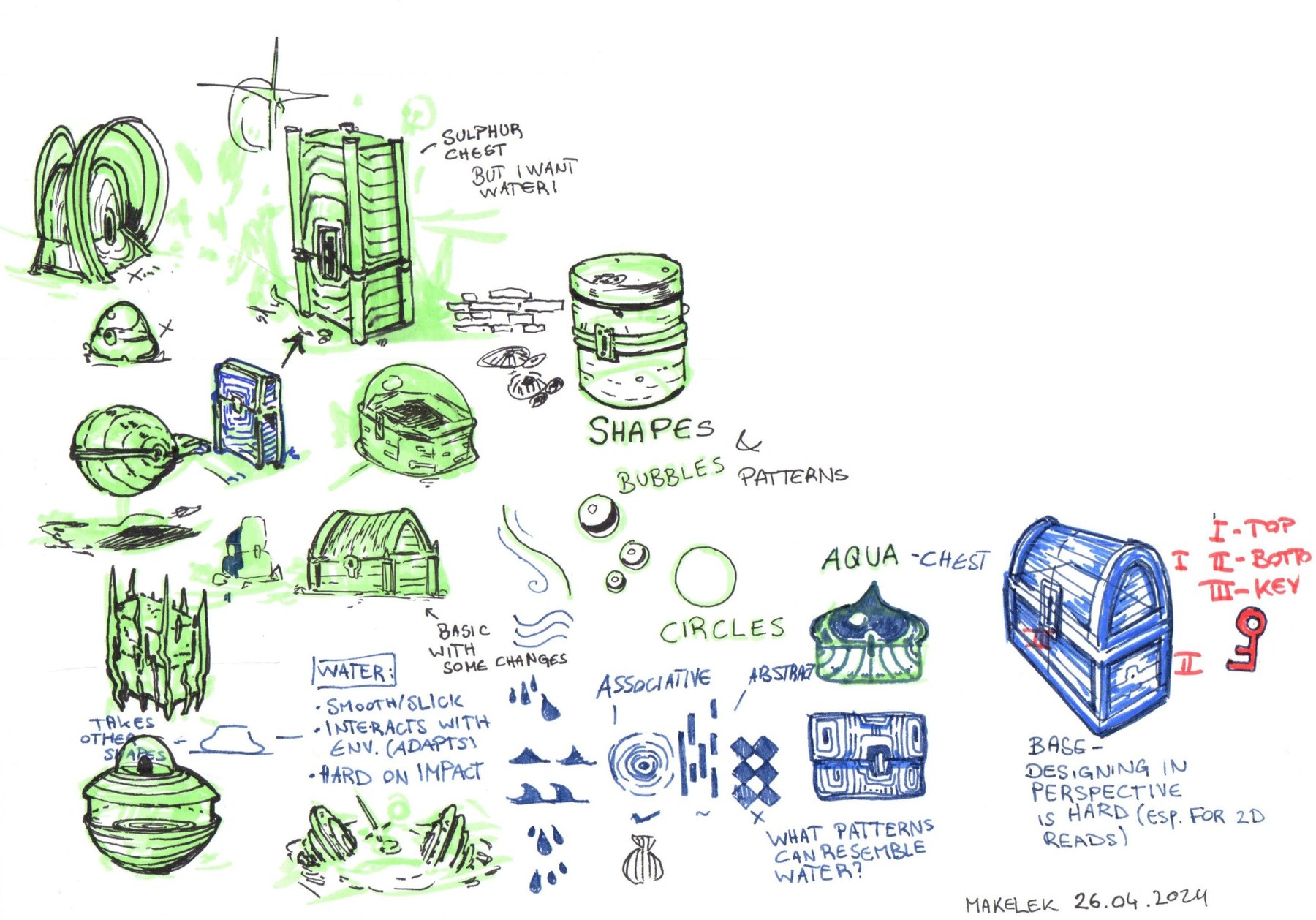
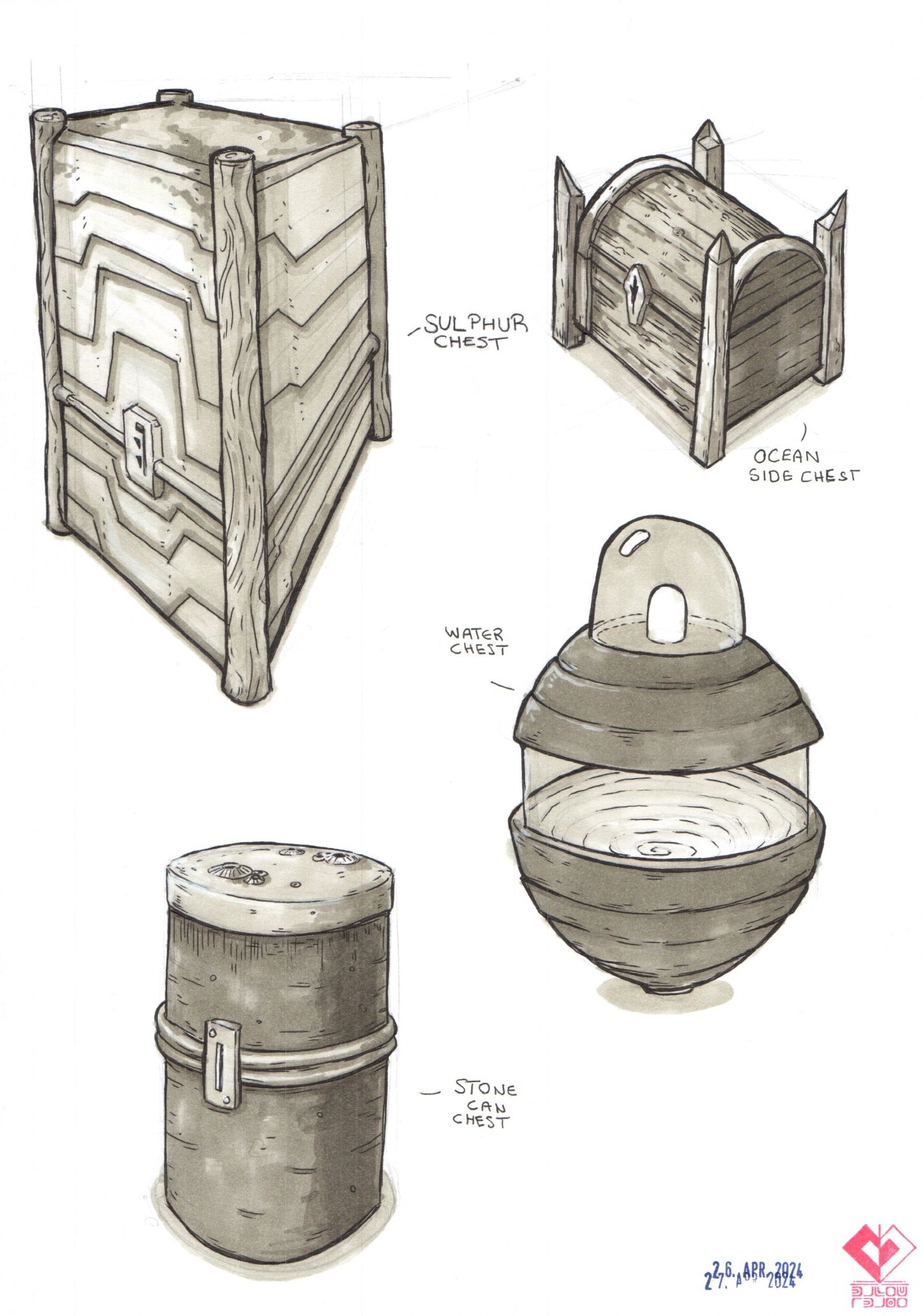
Treasure chests, designed on paper. Left: the exploration sheet, marker and ballpoint, trying out shapes, materials and patterns for a set of chests. Right: the four designs that survived, finalized in ink and marker on the next sheet before anything was touched digitally. Makelek, April 2024.
These processes have also brought average quality up, since failure and error rates could be reduced, similar to the calculator, which helped normal people do complex arithmetic in a timely manner. But something got lost along the way over the years. Of course, this is a vast simplification of trends, changes in the economy, and design styles. Even now, many people still design with pencil first and then translate those ideas into other mediums. Though I want to showcase the exact thing we're giving up by not being effective on our own.
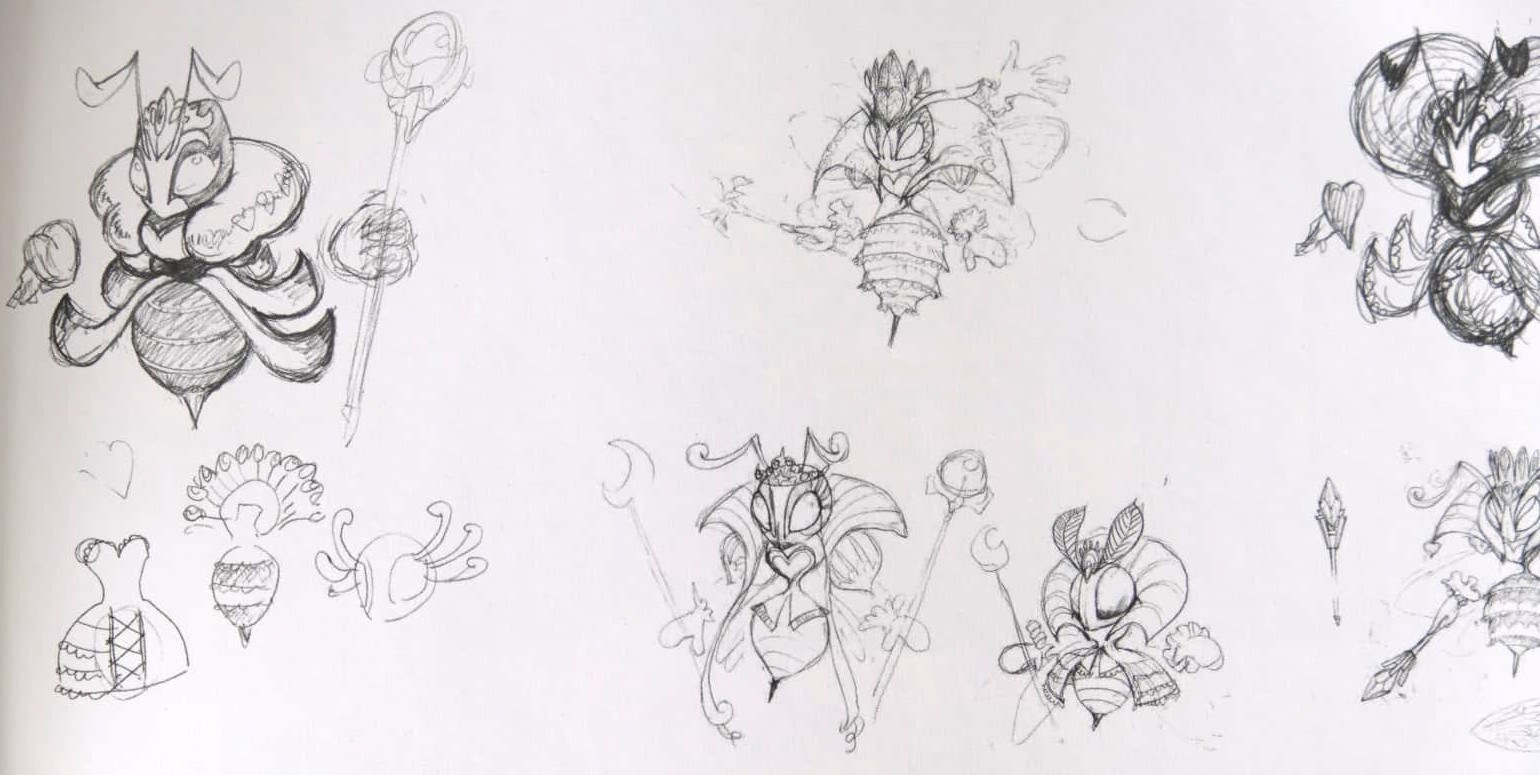
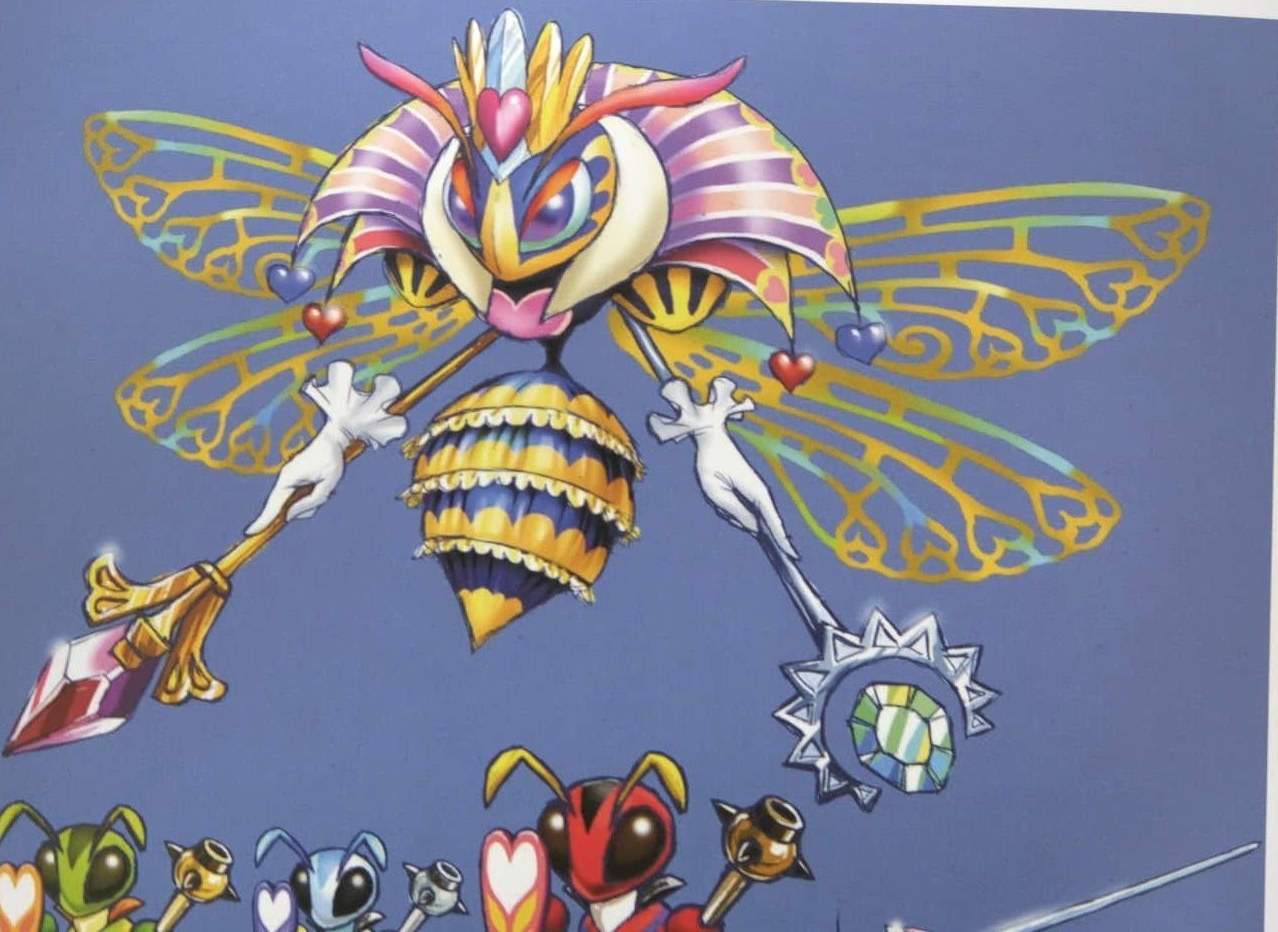
Still pencil first. Left: loose pencil variations of Queen Sectonia, trying out crowns, dresses, staffs and silhouettes. Right: the finished, fully painted design. Even a polished modern production starts on paper. Photographed from Kirby: Art & Style Collection.
"Law of the Instrument"
I do believe that relying on tools changes how you think about things in the first place. Maslow (1966) postulated that if the only tool you have is a hammer, then everything will be a nail to you. The Hammer is a very obvious and easy to understand example transferring the same idea to something like for example Photoshop, which is a suite of tools, we can observe that the space spanned by Photoshop is just multidimensional compared to the hammer. Yet if a certain path isn't immediately obvious that effect or process isn't even thought of. Or someone who never programmed in Python wouldn't even think that manual memory management is an option. There are many examples like that, but essentially the tools and services you use themselves dictate the bounds of how you think.
Professionalization
Now that creating is so easy, I'll use Photoshop as my example again instead of AI tools, since those have too wide a spread and are too opinionated to make my point clearly.
When Photoshop arrived, the pressure to have photos and graphics that are spotless grew. Now everyone can do it, and so should you!
Essentially people got really, really good at using these tools at scale to create high volumes of amazing work. I mean, with a modern software development environment, a single person could already create such high-quality programs with a fraction of what was possible even a couple of years back.
But that also meant that childlike playfulness, quirky decisions, and personal preferences mattered less and less.
A good example of this is almost any media material created in interdisciplinary fields at the time of around 1980-2010: games, websites, hip-hop music culture. Games especially show this arc clearly, from scrappy early work to today's polished, professionalized output. Of course the time frame is much fuzzier than that, and I'd rephrase again that all of this is a massive simplification of what actually happened in detail.
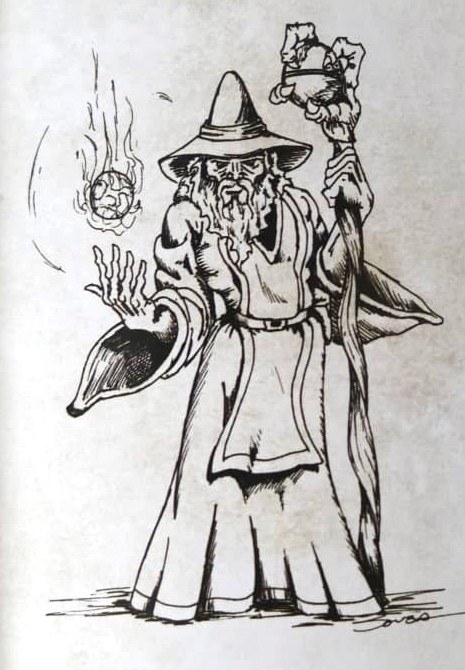
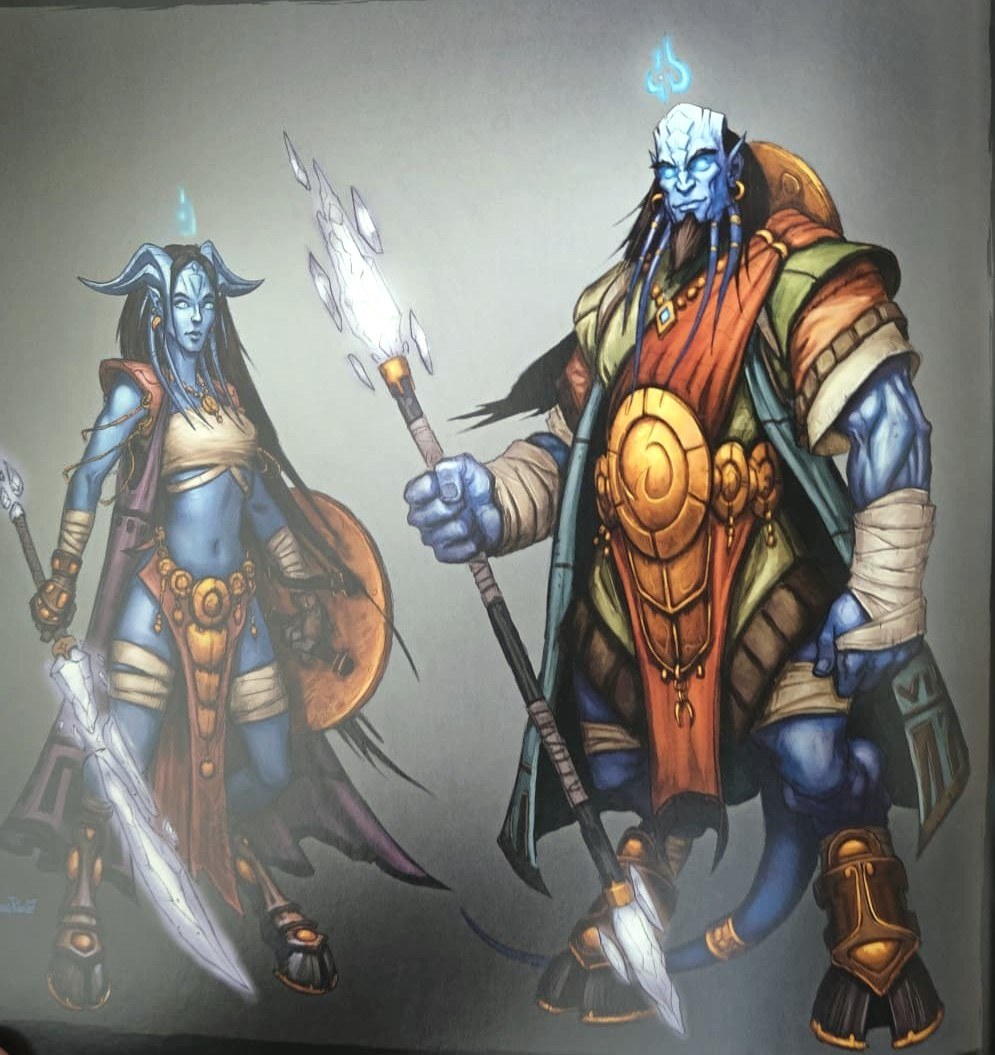
Blizzard, then and now. Left: an inked wizard from the studio's early days. Right: painted draenei concepts from the World of Warcraft era, fully rendered in colour, light and material. Photographed from The Art of Blizzard Entertainment.
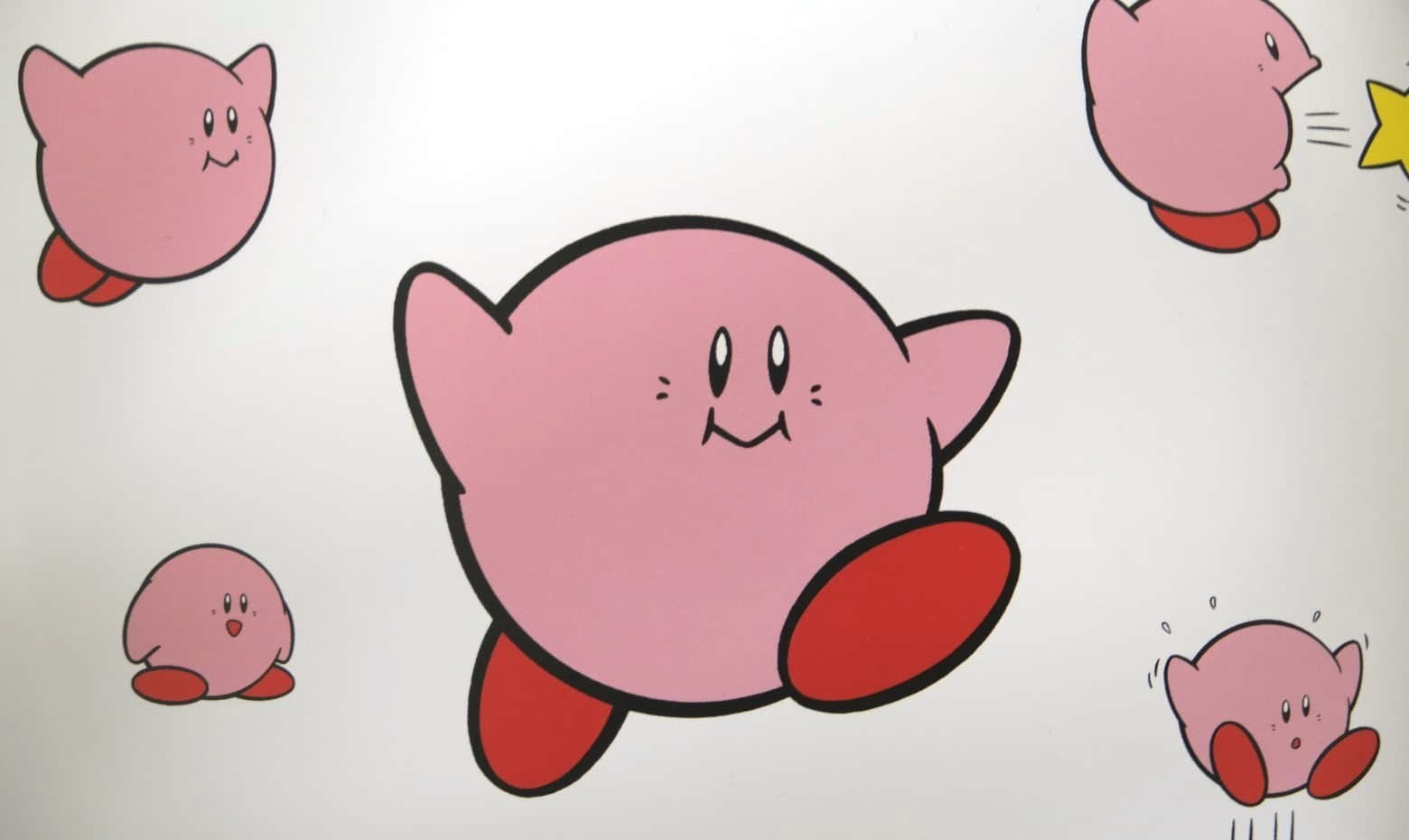
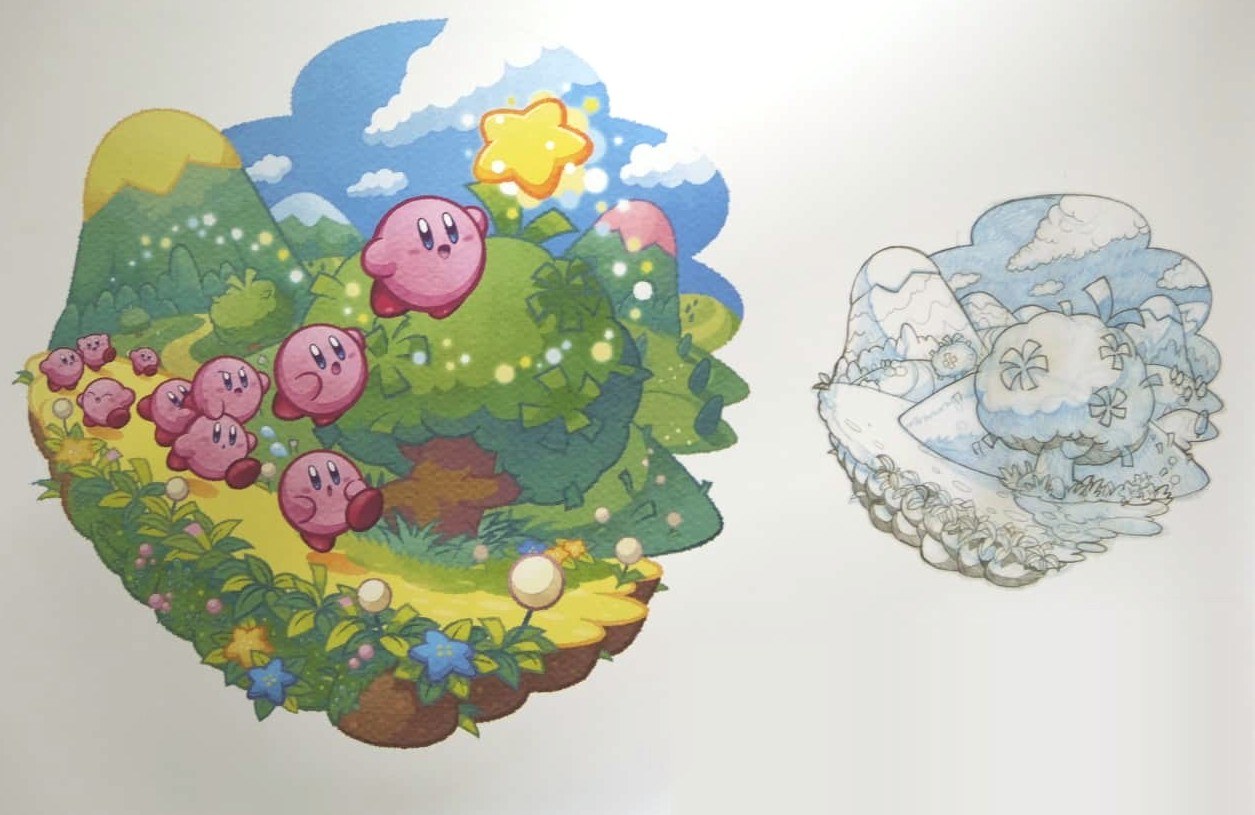
Kirby, then and now. Left: the classic flat colour and bold outline Kirby. Right: a modern painted illustration, printed next to the pencil underdrawing it started from. Photographed from Kirby: Art & Style Collection.
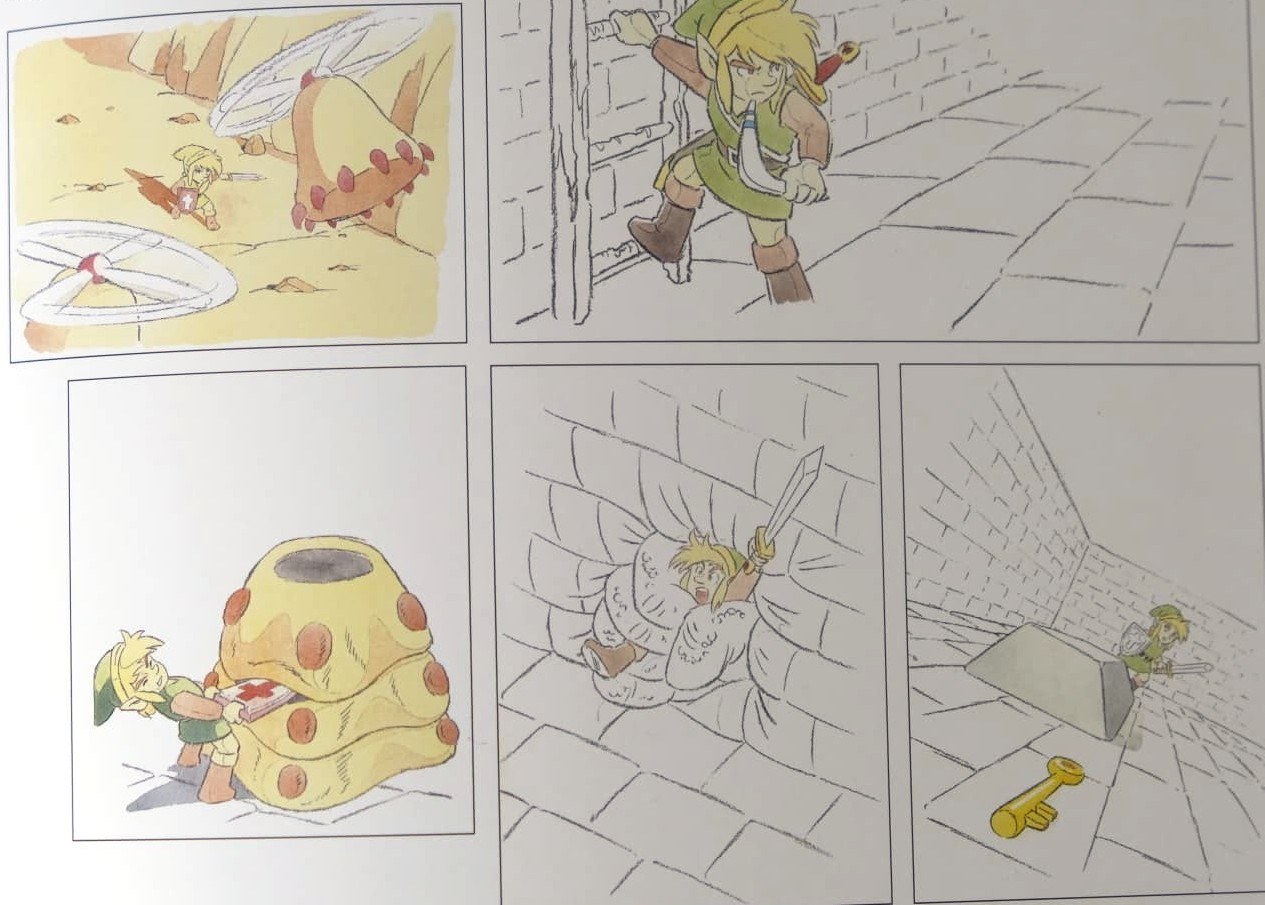
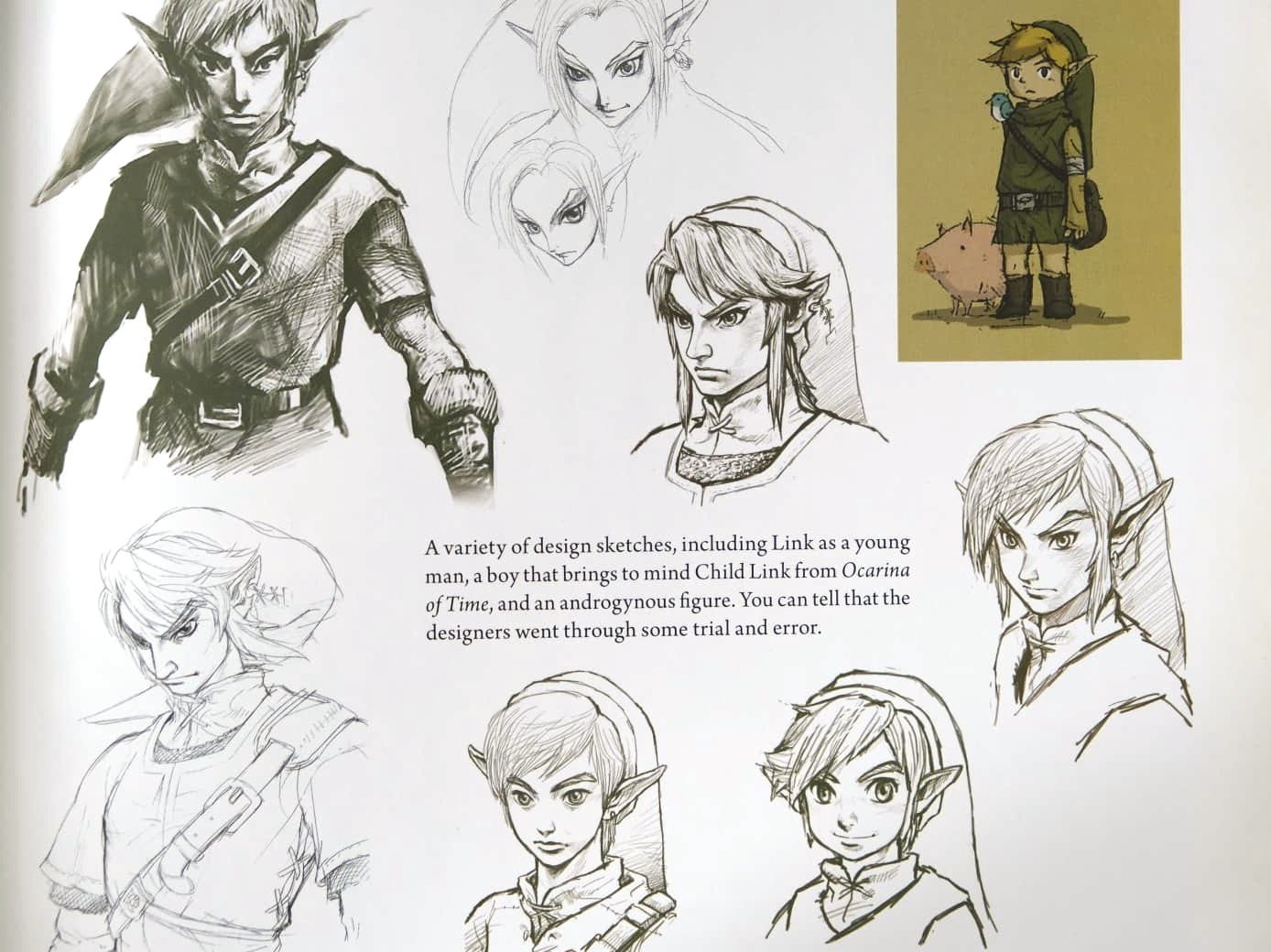
Zelda, then and now. Left: watercolour illustrations from the early games, a Peahat and what may be a prototype Wallmaster. Right: Twilight Princess design sketches exploring Link as a young man, a boy and an androgynous figure. Photographed from The Legend of Zelda: Hyrule Historia.
Looking at how children's media went from the early 90s having a lot of edge, using Teenage Mutant Ninja Turtles as a more extreme example, to 2020 which got much more mass marketable. Or better said commodified, while optimizing these IPs that already have a big following to bring in even more people.
Mental Velocity
Another important thing we give up on is time! A good friend of mine always told me, "slow down to speed up," which was almost like a mantra of his school at the time.
Tools act as accelerators, so one has to be very mindful of one's relative speed. And I'd argue velocity isn't purely physical either. The way I'd explain it for anyone to get the idea immediately is cars. When traveling by car we reach our destination really quickly. Compare that to going by foot, by train, by bike, or by motorbike: the danger, the effort, the resources and many more little things. Basically the whole experience changes.
The same applies to mental work. Let's call this "mental velocity." When acting at a high mental velocity, only the most important, surface-level details of a design are important, not the deeper details, and not the meaning. When designing a logo nowadays, one usually needs it to be readable in exactly those high-velocity spaces. And like driving, changing direction at that speed is also very difficult.
The idea with paper is that even if tools are used, your mental velocity won't go above a certain threshold. Even if it looks fast, it's usually just the person's own rhythm. Designing something elaborate on paper, not just a quick sketch, should therefore be a conscious decision, the same way going through a forest by car, by horse, or by foot is a conscious decision.
If you already know you're just rushing from city to city like everyone else, that's fine. All I want to get across is that we've stopped exploring the little side streets, the ones with a tree or maybe cool graffiti that you enjoy.
Circling back to AI, it is said that it will be the ultimate speed tool. That will get you to your destination almost instantly. This also means its velocity is so high that it will bounce from destination to destination. And in some absurd way, it forces us to slow down again and consider the little side streets again.
So What Makes Paper Special?
So what makes designing on paper so special? Well, for one, even on paper we have tools: grids, lines, rulers, french curves, different ways of mark-making, templates, and the list goes on. I think what makes paper special is that it's the most direct way for us to stream our minds into this world. Or better phrased: there is nothing between you and the paper that can change your mind, other than your own experience.
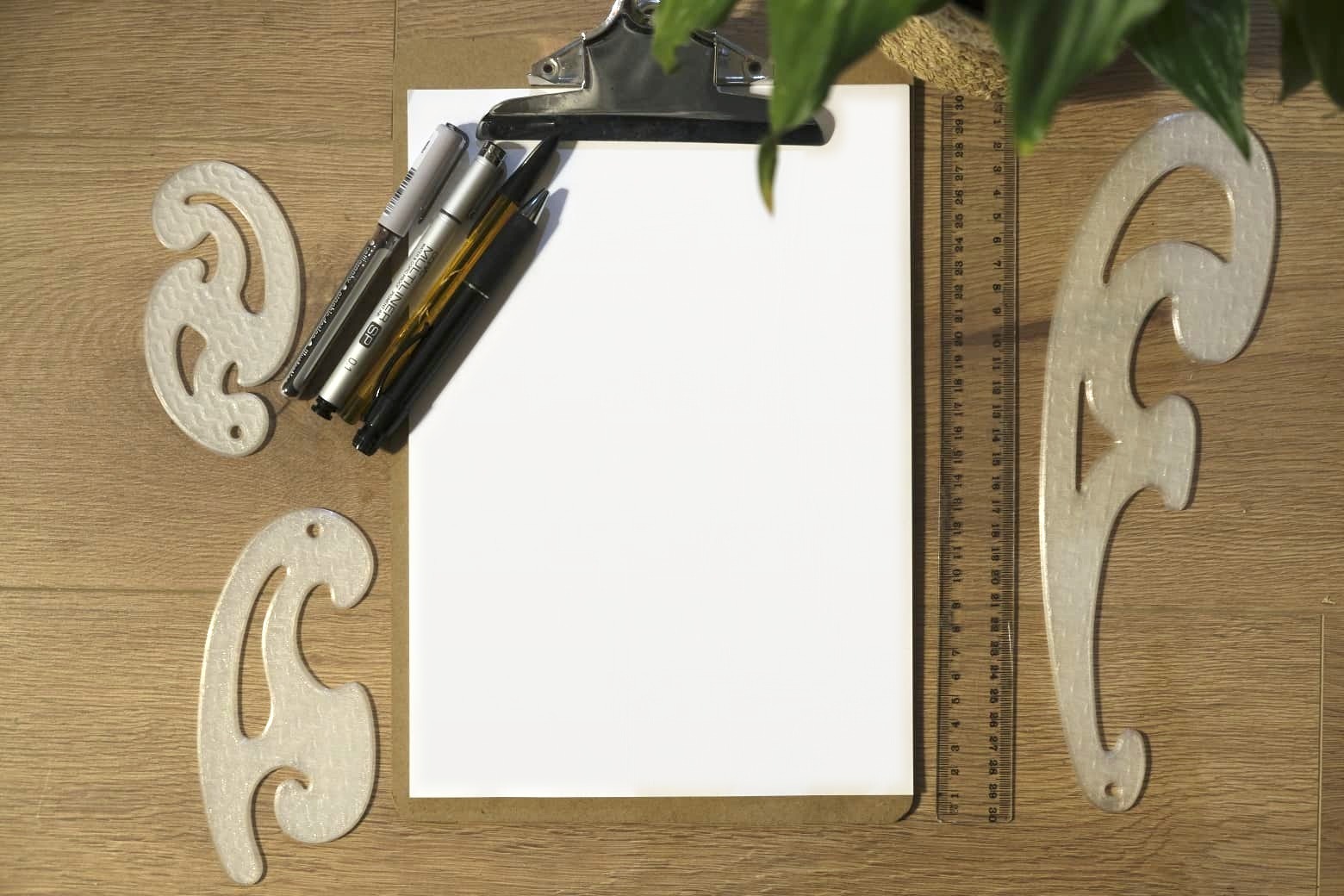
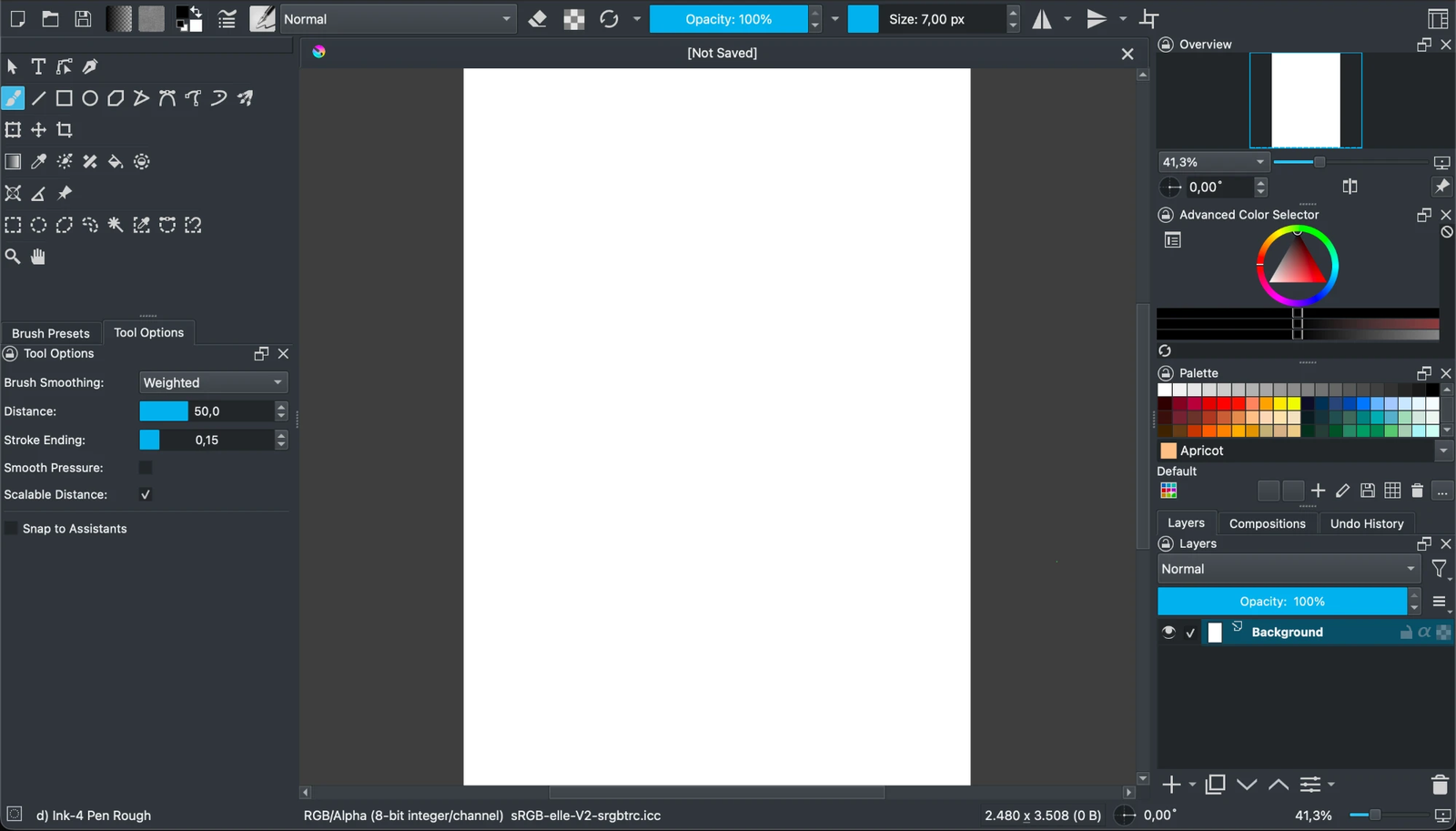
Two blank pages. Left: a sheet of paper, with its tools lying next to it: fineliners, a pencil, a ruler and French curves. Right: a fresh canvas in Krita, already framed by brush presets, layers, colour selectors and a toolbar. Same starting point, a very different amount of stuff standing between you and the first mark.
It is your entire purpose when interacting with it, and that, as explained before, doesn't mean it's of higher quality. Möller and colleagues define quality as "the outcome of an individual's comparison and judgment process," not a fixed set of inherent traits, what they call "qualitas". What I'd argue is that what you personally deem as high quality translates into a certain authenticity that, when kept in the implementation, can be very endearing.
Tools and services have always given us ways to create more, and more differently too, but in our quest for efficiency we've arrived at AI slop, which in some sense might be the snake finally catching its own tail.
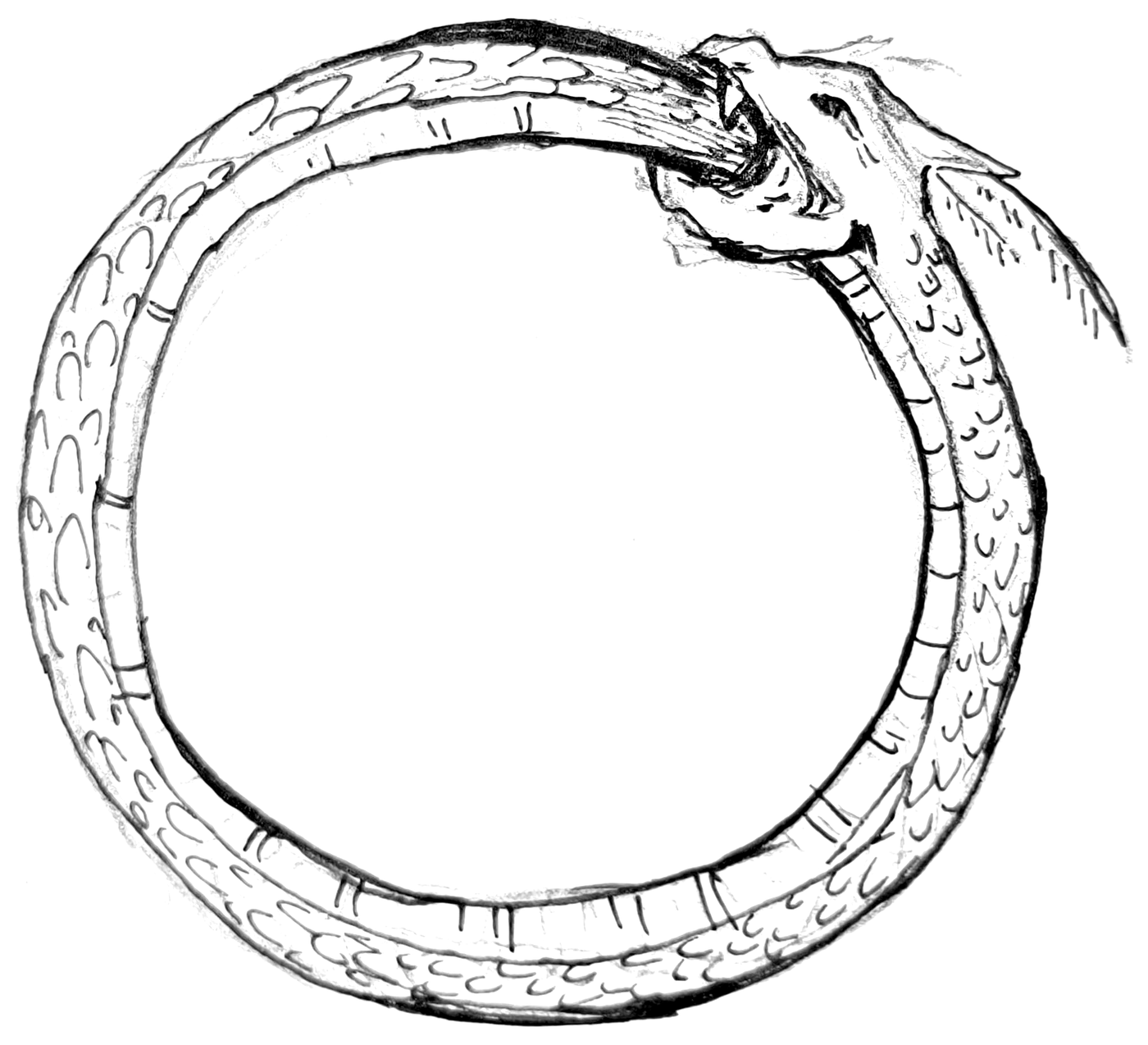
Ouroboros. The snake eating its own tail, pencil and ink. Tools built to make more, faster, trained on the output of tools built to make more, faster.
I have more thoughts on this specifically in the context of art, but for now: go ahead and enjoy being mediocre. Have fun, be authentic, and use more paper!
References:
- The Art of Blizzard Entertainment, Insight Editions, 2013. ISBN 978-1-60887-027-1.
- Kirby: Art & Style Collection, VIZ Media, 2020. ISBN 978-1-9747-1179-6.
- The Legend of Zelda: Hyrule Historia, Dark Horse Books, 2013. ISBN 978-1-61655-041-7.
- Maslow, A. H., The Psychology of Science: A Reconnaissance, Harper & Row, 1966, pp. 15-16. Gateway Editions reprint, ISBN 978-0-8092-6130-7.
- Möller, S., Quality Engineering: Qualität kommunikationstechnischer Systeme, Springer, 2010. ISBN 978-3-642-11547-9.
- Le Callet, P., Möller, S., Perkis, A. (eds.), Qualinet White Paper on Definitions of Quality of Experience, Qualinet (COST Action IC 1003), 2013. Technical report, no ISBN.
This is only my anecdotal observation from 2026, and not evidence based science.
This blog was first written on paper, then transliterated by an AI service, then edited and corrected by me, then proofread by AI, and the HTML, CSS, and JS were entirely generated by an AI service.